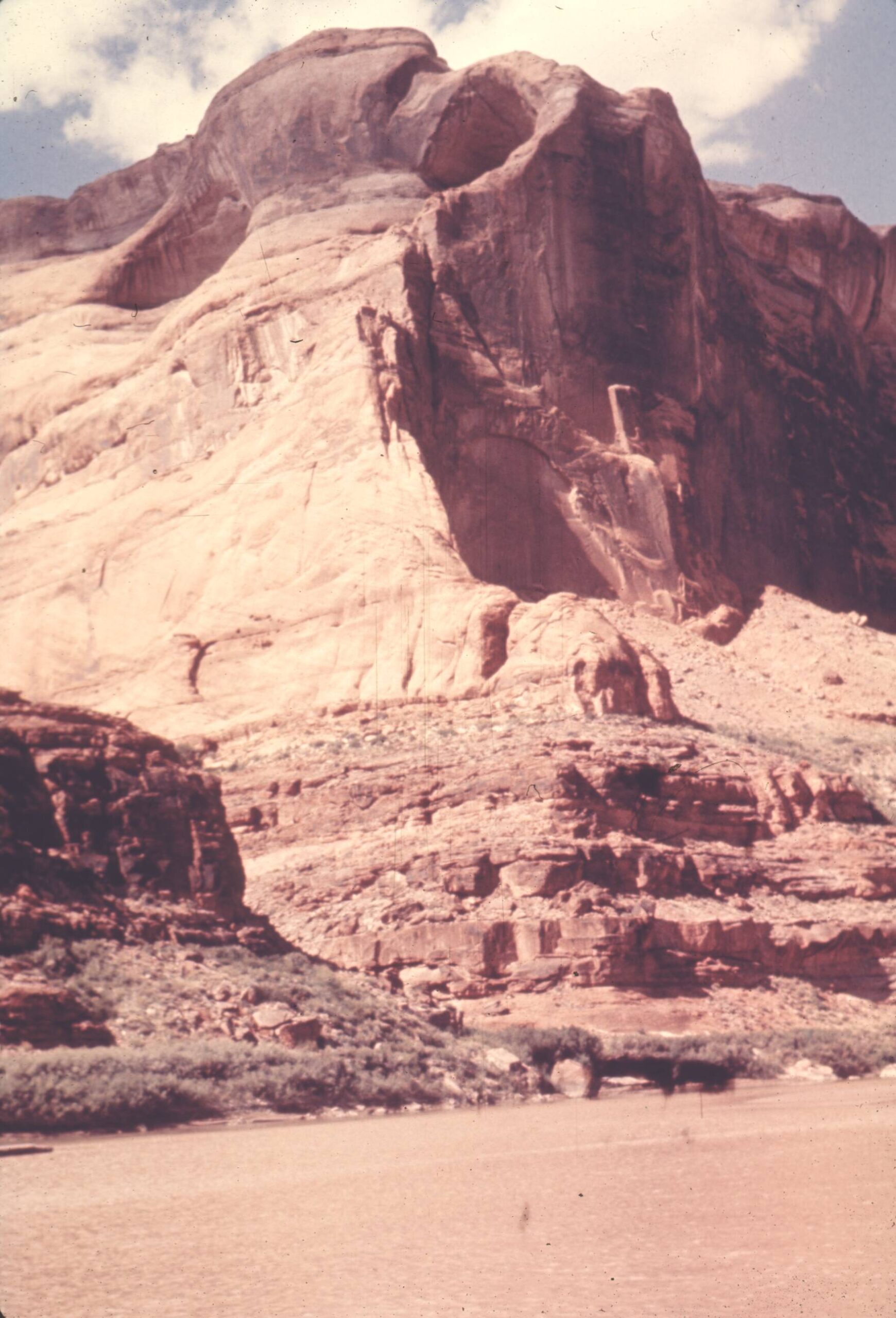
The red rock country of southern Utah is a landscape defined by an uneasy balance between breathtaking beauty and unforgiving isolation. For generations, the vast, sun-scorched plateaus of Garfield and Kane counties have drawn adventurers seeking to test their limits against some of the most rugged terrain in North America. Yet, interwoven with the region’s rich lore of pioneer endurance and geological wonders are profound tragedies that left deep scars on local communities.
Among these, few historical events carry the emotional weight or structural impact of the Carcass Wash tragedy. On June 10, 1963, an ambitious youth river-running expedition met with a catastrophic mechanical failure on a remote desert road. The resulting accident claimed thirteen lives—seven young Explorer Scouts and six adults—making it one of the deadliest vehicular disasters in Utah’s history.
Beyond the immediate heartbreak that devastated the city of Provo and the wider state, the disaster at Carcass Wash reshaped safety protocols, altered state transportation regulations, and fundamentally transformed how youth outdoor excursions are organized to this day.
The Vision: Running the Ancient Glen Canyon
The summer of 1963 was marked by a sense of impending finality for outdoor enthusiasts in the American Southwest. The construction of the Glen Canyon Dam was nearing completion, and the rising waters of the Colorado River would soon submerge centuries of history, ancient Indigenous sites, and pristine desert canyons beneath what would become Lake Powell.
For the members of Explorer Scout Post 36—sponsored by the Pleasant View 3rd Ward of the Church of Jesus Christ of Latter-day Saints in Provo, Utah—the opportunity to run the rapids of Glen Canyon before they vanished forever was the ultimate adventure. It was a trip planned meticulously over many months, representing a rite of passage for the young men involved.
To turn this ambitious vision into reality, the Scout leaders partnered with a specialized organization known as SOCOTWA (Southern Colorado River, Two Weeks Association). Founded by Dr. Martin J. “Merlin” Shaw, an educator and visionary outdoorsman, SOCOTWA was a pioneer in structured youth river-running. Long before commercial outfitting was highly regulated, Shaw’s organization gave hundreds of young people their first taste of wilderness exploration.
The planned route was legendary: the expedition would travel south from Provo to the tiny, isolated outpost of Escalante. From there, they would navigate the notorious Hole-in-the-Rock Road—a historic, bone-jarring 62-mile pioneer trail—to reach the shores of the Colorado River. Once at the water, they were scheduled to meet a fleet of boats to carry them through the majestic canyon.
The Fatal Decision at Escalante
On Monday morning, June 10, 1963, the expedition departed Provo full of optimism. The group originally traveled south aboard a standard passenger bus, carrying their gear, supplies, and high spirits. However, upon arriving in the town of Escalante, the gateway to the deep desert, the expedition hit an unexpected logistical hurdle.
Local residents and a service station attendant warned the leaders that the unpaved, deeply rutted, and heavily eroded Hole-in-the-Rock Road was completely impassable for a standard commercial bus. The heavy vehicle would almost certainly high-center or break an axle in the remote washes.
Determined to keep the expedition on schedule, the leaders sought an alternative solution. They arranged to use a 2.5-ton International stake-bed truck—essentially a large cattle truck—to transport the entire party and their extensive provisions across the remaining 62 miles of wilderness.
It was a decision born out of pragmatic necessity, entirely characteristic of the era’s relaxed approach to rural transport. The group’s gear, including heavy metal boxes, canvas tents, and rafting supplies, was packed tightly into the bed of the truck.
Because space was limited, the logistical plan mutated: instead of riding in the safety of a bus, 46 passengers—the vast majority of them young teenage scouts—piled directly into the open back of the truck, sitting on top of their piled camping equipment. Three others, including the driver, Ernest Ahlborn, rode in the front cab. With 49 people on board, the heavily laden vehicle rumbled out of Escalante and into the desert heat.
Disaster at Carcass Wash
For hours, the truck crawled along the dusty, undulating spine of the Kaiparowits Plateau. The road was a relentless sequence of steep ascents, sharp curves, and sudden drops into dry creek beds. By mid-afternoon, the truck approached a particularly treacherous stretch of the trail, roughly 45 miles southeast of Escalante, hauntingly named Carcass Wash.
At approximately 3:15 PM, the truck began to ascend a steep, winding incline featuring an 8% grade. As the vehicle neared the crest of the hill, the engine began to struggle under the immense weight of the passengers and cargo. Recognizing the need for more power, the driver attempted to shift down from second gear to first.
In that critical moment, mechanical failure struck. The truck’s transmission failed to mesh. As Ahlborn revved the engine in a desperate bid to force the gears to engage, the clutch failed to catch, leaving the vehicle trapped in neutral. Deprived of engine power, the massive truck instantly stalled and began rolling backward down the steep grade.
Ahlborn slammed his foot onto the brake pedal, but there was no response. A subsequent investigation by the Utah Highway Patrol would reveal a devastating oversight: the truck’s brake master cylinder was almost entirely devoid of fluid. Though no leaks were found in the hydraulic lines, the critical safety system had simply not been serviced before the grueling desert trip.
With no gears engaged and no brakes to slow its descent, the truck rapidly gained backward momentum, rolling 124 feet down the hill. As it hit the sharp curve at the bottom of the wash, the wheels caught the soft earth of the shoulder. The vehicle plunged over a 35-foot embankment, flipping completely upside down before crashing into the rocky gulch below.
The Horror in the Canyon
The scene inside Carcass Wash was instantaneous chaos. The force of the rollover violently ejected the passengers and buried them beneath the shifting mass of heavy camp gear, steel supply boxes, and the crushing weight of the overturned 2.5-ton truck. Thick clouds of red desert dust choked the air, mixing with the sharp smell of gasoline leaking from a ruptured fuel tank.
For those who survived the initial impact, the reality of their situation was terrifying. They were pinned in a remote ravine, tens of miles from the nearest telephone or medical facility, with many of their friends and adult leaders trapped or dead beside them.
Amidst the horror, remarkable acts of clear-headed heroism emerged. Tom Heal (15) and Brian Roundy (14), two scouts who managed to escape the wreckage with relatively minor injuries, realized that no one was coming to save them unless they found help.
Exhibiting extraordinary discipline, the two boys climbed out of the wash and began walking back down the brutal, sun-baked road toward Escalante. After a grueling two-mile trek through the desert heat, they happened upon Clynn Haws, a local rancher who was out repairing his fences. Recognizing the gravity of the boys’ report, Haws immediately raced to summon emergency services.
A Daunting Rescue Operation
When word of the accident reached civilization, it triggered one of the most logistically daunting rescue operations in Utah history. Garfield County Sheriff George Middleton was the first official to arrive at Carcass Wash, followed eventually by Kane County Sheriff Leonard Johnson, who had to drive 175 miles from Kanab to reach the site.
Because the location was so isolated, it took over four hours for a substantial rescue force of state troopers, local volunteers, and medical personnel to arrive. Rescuers found a scene of devastation.
Without heavy machinery available in the wilderness, volunteers had to lift the overturned truck manually using small mechanical jacks, stacking flat desert rocks underneath the chassis inch by inch, then moving the jacks to elevate the other side to pull pinned survivors free.
The small community hospital in Panguitch, with a standard capacity of just 10 patients, suddenly found itself the epicenter of a mass-casualty crisis. Over the course of the evening, pickup trucks, station wagons, and law enforcement vehicles transformed into makeshift ambulances, shuttling 34 injured survivors over the rough roads to the facility.
Local doctors, nurses, and volunteers worked through the night, converting hallways into triage units to treat broken bones, internal injuries, and severe lacerations.
Despite the heroic efforts of the rescuers and medical staff, the toll was catastrophic. Twelve individuals died at the scene or shortly thereafter. A thirteenth victim, an adult leader, succumbed to his injuries days later at the Panguitch hospital.
The tragedy wiped out an entire generation of leadership and youth within the Provo Pleasant View ward.
| Victims of the 1963 Carcass Wash Tragedy |
| The Explorer Scouts (Post 36) |
| Gary Lynn Christensen (Age 14) |
| Joseph William Erickson (Age 16) |
| Gordon Henry Grow (Age 15) |
| Randy L. Hall (Age 13) |
| Lynn Louis Merrell (Age 15) |
| Randy Wayne Miller (Age 14) |
| Gary Lynn Rasmussen (Age 15) |
| The Adult Leaders & Organizers |
| Robert Cook (Age 29) — Salt Lake City Teacher |
| W.A. “Bill” Creer (Age 39) — Assistant Scoutmaster |
| Dorothy Jane Hansen (Age 24) — Deseret News Reporter |
| Marvin Poschatis (Age 29) |
| Dr. Martin J. “Merlin” Shaw (Age 51) — SOCOTWA Founder |
| Dr. Harvey Darrell Taylor (Age 45) — Scoutmaster & BYU Professor |
Grief and Structural Change
The impact of the Carcass Wash tragedy reverberated across Utah. In Provo, a profound cloud of grief settled over the community as Bishop Free of the Pleasant View Ward had to visit the homes of the families one by one to deliver the news of who had survived and who had passed away. Joint funerals drew thousands of mourners, and the state went into a period of deep reflection regarding public safety.
The official investigation by the Utah Highway Patrol quickly cleared the driver of operational fault, firmly placing the blame on mechanical failure due to inadequate vehicle maintenance. This distinction sparked a broader conversation about public safety and the transport of human cargo.
Prior to 1963, it was common practice throughout the rural West to transport large groups of youth in open-bed trucks for scouting, church, and school activities. The Carcass Wash disaster effectively brought an end to that era.
In the wake of the accident, the state of Utah implemented strict new transportation safety regulations. The Boy Scouts of America and local church organizations dramatically overhauled their outdoor excursion policies, explicitly banning the transportation of passengers in open-bed or non-passenger vehicles.
Mandatory vehicle inspections, strict seatbelt requirements, and formalized risk-management assessments for wilderness travel became the standard, permanently altering the operational landscape of youth outdoor education.
Preserving the Memory
For decades, survivors of the crash carried the physical and emotional scars of that June afternoon. Many avoided the remote road entirely, finding the memories of the grinding gears and the dust of Carcass Wash too painful to revisit.
However, on June 10, 1993—exactly thirty years after the accident—survivors, family members, and friends returned to the site in cooperation with Kane County and the Bureau of Land Management. Together, they erected a permanent bronze memorial plaque on a stone monument overlooking the wash.
The monument stands as a stark reminder to travelers navigating the Hole-in-the-Rock Road of the lives cut short, the courage of the survivors, and the profound tragedy that permanently changed the rules of safety in the American desert.
For a deeper dive into the geographic layout and historical context of the route where this tragedy took place, you can view this Hole in the Rock Road Video Exploration. This video provides a direct visual look at the steep grades, rough dirt terrain, and remote isolation of the Carcass Wash area as it looks today.